
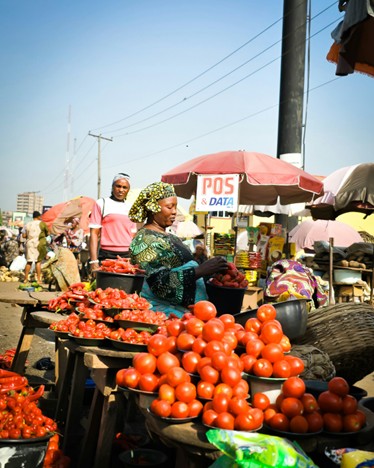
From the Ground Up: Rethinking Social Policy for Africa’s Informal Economy
The Gender Equitable and Transformative Social Policy for Africa (GETSPA) initiative hosted another insightful webinar session on 9 October 2025, featuring Professor Laura Alfers, International Coordinator at WIEGO (Women in Informal Employment: Globalizing and Organizing). Her talk, titled “From the Ground Up: Rethinking Social Policy for Africa’s Informal Economy,” challenged participants to look beyond conventional approaches and build social policy rooted in the realities of Africa’s informal workforce.
Recognising Africa’s Informal Workers
Professor Alfers began by highlighting that over 80% of Africa’s workforce operates in informal employment, including self-employed traders, domestic workers, market porters, and waste pickers. Yet, these workers, particularly women, occupy the most vulnerable positions, often without access to stable income, social protection, or recognition in public policy.
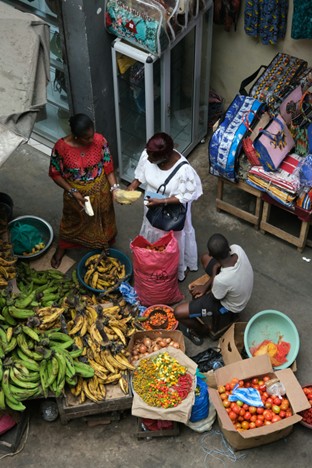
African women traders in a bustling market
She cautioned against viewing the informal economy as a homogenous group, stressing regional and gender differences. For instance, while formal employment dominates in Southern and Northern Africa, own-account work and unpaid family labour are more common in West and East Africa. “We can’t think of Africa’s informal economy as one thing,” she noted. “There are different risks, different realities, and different pathways to protection.”
Flipping the Script: Social policy with and for workers
Drawing inspiration from the late Thandika Mkandawire’s framework of Transformative Social Policy, Alfers organised her reflections around four key pillars, redistribution, protection, production, and reproduction, and argued that informal workers already perform many of these functions, often without state support.
Contrary to popular belief, informal workers do pay taxes; often regressively. Alfers shared evidence from Ghana showing that poorer informal workers contribute disproportionately through flat presumptive taxes and market levies, sometimes paying up to 50% of their income. Yet, they receive few public services in return. She called for fairer fiscal systems that lift the tax burden off low-income workers and ensure corporations and high earners contribute their share.
In the absence of robust state safety nets, informal workers’ organisations have built their own cooperatives and mutual aid schemes. The Federation of Informal Workers of Nigeria’s Cooperative, for example, provided emergency loans and school fee support during the COVID-19 crisis; demonstrating grassroots innovation in social protection. However, Alfers noted the limits of “poor people cross-subsidising poor people,” calling for greater state partnership and investment.
The informal economy contributes an estimated 34% of Africa’s GDP, yet is often labelled “unproductive.” Alfers challenged this perception, pointing to structural barriers such as poor infrastructure, harassment, and lack of demand. She cited South Africa’s waste picker integration guidelines as an example of inclusive formalisation that could link social and industrial policy; though such initiatives often struggle against privatisation trends.
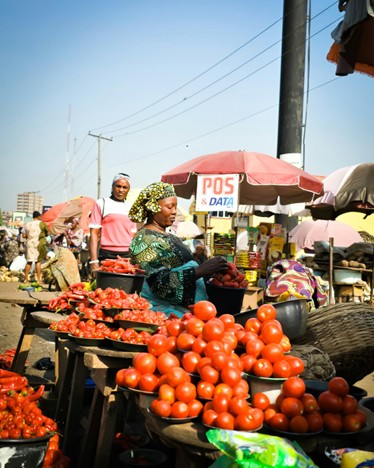
The informal economy contributes an estimated 34% of Africa’s GDP, yet is often labelled “unproductive.”
Women in the informal economy bear a heavy unpaid care burden that reduces their earnings and work opportunities. During COVID-19, women informal workers who faced increased care responsibilities earned only half their pre-pandemic income. Alfers highlighted a promising initiative in Accra’s Makola Market, where the Ghana Alliance of Market Associations established a community childcare centre; an example of investing in care as economic infrastructure, not charity.
Building Social Policy from the Ground Up
Professor Alfers urged policymakers to move beyond seeing informal workers as targets of policy, and instead as co-creators of social solutions. “The informal economy is already doing what social policy should be doing,” she said. “If we are serious about transformation, we must build from the ground up; learning from what workers are already doing and scaling that through public systems.”
Her presentation underscored a central GETSPA message, transformative social policy in Africa must be inclusive, gender-sensitive, and anchored in everyday realities. By valuing informal workers’ contributions to redistribution, protection, production, and care, African states can design policies that advance equity and resilience; not only for the few in formal jobs but for the majority sustaining cities, economies, and households.
- Log in to post comments