
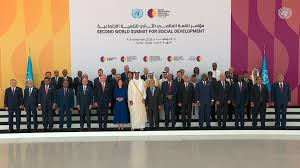
Moving from Commitment to Fulfilment of Social Development: Reflections on the Second World Social Summit
By Fati Abigail Abdulai
Executive Director-Widows and Orphans Movement
Steering Committee member of NETRIGHT
The Second World Summit for Social Development took place from the 4th to the 6th of November 2025, in Doha, Qatar. As the norm would have it, the gathering brought together heads of state, Governments and high representatives. Of course, civil society invited itself and used the opportunity to hold side events.
It was clear that, while the struggles to attain social development in many countries were structurally similar, they were also nuanced in quite different ways. For example, many countries agree that the tax regimes anchored by the global tax standards set by the Organisation for Economic Co-operation and Development (OECD), and which organisations like the IMF, other world economic bodies and countries use as a basis to provide policy advice or design tax systems, are fundamentally structured to burden the poor and keep them disproportionately poorer with the face of poverty being dominantly female.
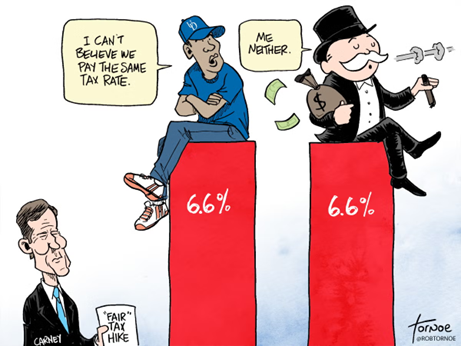
Tax systems are fundamentally structured to burden the poor and keep them disproportionately poorer. (Image credit: Robtornoe)
Some delegates also firmly believed that corruption remains a canker in many countries, eroding the resources mobilised, making the fight to end poverty a nine-day wonder. So, countries need to put in place sustained measures to expunge the canker and smooth the road to achieving sustainable social development. More so in African countries that tend to have numerous natural resources, such as gold, other rare minerals, cocoa, and agriculturally fertile lands, which are being exploited to the benefit of a few people.
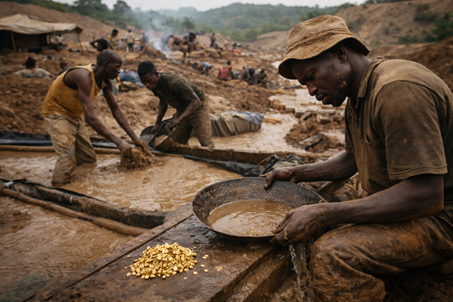
Despite abundant natural resources, weak governance and corruption often limit inclusive social development.
Solution-oriented Initiatives being rolled out in many countries were found to use the same frameworks, contextualised to fit each country. Thus, many countries were running microcredit schemes for women, start-up support for young entrepreneurs, and educational initiatives, among other schemes. A few innovations were inspiring to see for example, the ability of some NGOs in Asian countries to access capital markets to support microfinance and impact investments. Notable is an NGO that accessed capital markets to fund education. In many African countries, the majority of businesses are unable to access capital markets, let alone national NGOs. Despite these, the main measures that would have the most sustained impact, like flexible long-term funding for youth and women entrepreneurs, scale-up funds or growth funds for medium-sized businesses, lower interest rates, etc., remained grey with no clear-cut steps to address them.
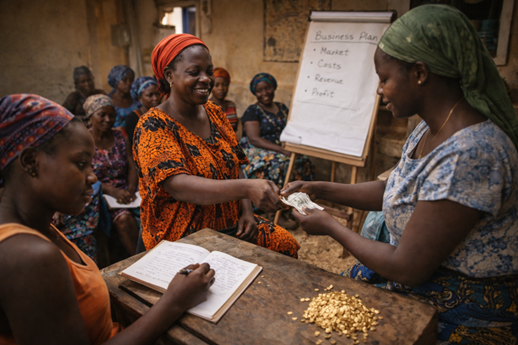
Targeted support for women and youth entrepreneurs remains a critical pathway to sustainable social development.
More worrying was the global shrinking of funding and spaces for social development, which particularly affected women's rights organisations (WROs) that work most closely with women. The opinion echoed by women’s rights organisations was that women’s human rights work can only be led by women, for women. This work by WROs remained the key ingredient to attaining social development. Sadly, this was not explicitly captured in the draft Doha political declaration, so WROs will have to keep advocating for it. It is only hoped that, in the current dispensation of lower funding to WROs, the critical work on social development that needs to be done does not further result in women doing unpaid work or further widening the gender pay gap, which disadvantages women in work that benefits the larger society.
Meanwhile, the declaration by governments, heads of state, and high representatives made a clear call to action. It is refreshing to see how comprehensive and encompassing the call to action is. It addresses socio-cultural norms; deepening poverty resulting from climate change; issues of disability, ageing, youth, and children; the unpaid care burden; decent work, among others. That reflects current needs.
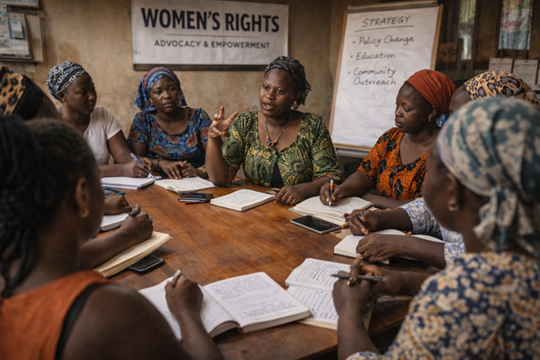
Women’s rights organisations play a central role in advancing social development.
Yet again, the resolution states clearly that, 30 years after the first world summit for social development, progress towards achieving the milestones remains slow and uneven, and significant gaps and inequalities persist within and among countries. This raises the question of whether countries will move beyond commitments to fulfilling the new resolution. It is a shame that this resolution lacks concrete consequences for non-compliance. I fear that this is another great talk shop that generated a grammatically correct diplomatic document. What will make this resolution different? Sadly, I have racked my brain and can't seem to find the renewed hope that the spirit of the resolution professes.
I therefore believe that WROs need to intensify efforts to hold our governments accountable so that countries like Ghana can make real progress. Countries where poverty is eradicated, youth have decent jobs, social and cultural norms and practices that promote discrimination and abuses cease to exist, and the general well-being of the people is paramount to every leader.
On a lighter note, Qatar did a good job hosting the summit, and it was refreshing that participants did not have to wait in long queues in the freezing cold or scorching sun sometimes seen during other summits hosted by different countries. Technology and innovation were truly being used to serve people's needs. Kudos!
- Log in to post comments