

The Fairy Dust Of Digitalization: Why Tech Won’t Deliver Social Development
Ruth Castel-Branco
Southern Centre for Inequality Studies, University of the Witwatersrand
The second World Summit for Social Development was a spectacular event. At a moment when the very idea of multilateralism feels increasingly precarious, the summit brought together an estimated 14,000 people from across the globe. World leaders reaffirmed their commitment to eradicate poverty, drive inclusive and sustainable growth, promote decent work and strengthen adaptive social protection systems. Yet beneath the scripted speeches from government, private sector and accredited civil society representatives, one issue remained conspicuously absent: the unequal distribution of power in the global economy. Instead, the spotlight was on solutions – generously coated in digital fairy dust.

Beneath the celebration of digital solutions at WSSD II lay a deeper silence: the unequal distribution of power in the global digital economy. (Image Credit: erhui1979/Getty Images)
Digital technologies featured prominently in the Doha Political Declaration. In her opening address, Deputy Secretary-General Amina J. Mohammed stressed the need to ensure “that the benefits of digital transformation and artificial intelligence be shared broadly and safely, bridging divides rather than widening them.” The declaration emphasized the importance of expanding digital infrastructure and connectivity, improving digital literacy and skills, and fostering innovation. And solutions sessions focused on the power of digital technologies to empower youth, formalize work, improve public services and “unlock” inclusive development. Taken together, the presentations drove home a singular point: digital technologies are the solution to the challenge of social development and improved access to digital technologies is essential.
The Unequal Distribution of Power
While improved access to digital technologies is undeniably important, a focus on access alone abstracts from a far more fundamental issue: the distribution of power in the digital economy. There was no discussion, for example, of how digital technologies have facilitated the concentration of capital across sectors and geographies, giving tech companies inordinate economic and political influence. Nor was there mention of how tech companies have taken advantage of the black box of digitalization to circumvent labour, social and data protections, generating new forms of labour exploitation, expropriation and exclusion. Also absent, was a discussion of the challenges workers face when organizing against these powerful firms and the persistent difficulties governments encounter when attempting to tax them.

Behind the promise of digital innovation lie new forms of labour exploitation, exclusion, and weakened collective power. (Image Credit: MCG'Zay/Pexels)
A serious analysis of the problems would have required confronting the unequal distribution of power within the digital economy. It would have prompted difficult questions about how to break up big tech monopolies and curb their influence, through global trade and competition regulations; how to strengthen the collective power of workers, by identifying “choke points” along the chain of value production and accumulation; how to purse new models of worker organizing and mobilization, that can respond to the increasingly footloose character of big tech companies; how to ensure that big tech complies with labour, social and data protections; and how to tax the enormous value big tech has been able to appropriate while avoiding fiscal accountability.
Three Examples of Digital Fairy Dust
Three examples of digital fairy dust come to mind. The first was the opening debate on social dialogue. Pressed by the International Trade Union Federation on its repression of freedom of association and collective bargaining, the Qatari government argued that it does promote social dialogue through its platform Sharek. Managed by the Civil Service and Government Development Bureau, Sharek is presented as a tool which allows individuals to share their views about national policies, strategies and initiatives. However, Sharek does not allow for collective organization, action and negotiation. On the contrary, it could easily become a mechanism of surveillance and control, thereby undermining the collective power of workers and other social forces.

Digital platforms presented as tools for participation can just as easily become mechanisms of surveillance and control. (Image Credit: brookings.edu)
Next, take the question of social protection. The World Bank has long used grant and loan financing to advance its policy agenda in low- and middle-income countries. By requiring countries to adopt single registries, it has been able to entrench a segregated system of social provisioning based on highly targeted social protection, often undermining the very entitlements guaranteed in national legislation. By pushing governments to outsource payment systems to private service providers, it has accelerated the financialization of social protection. These generic solutions, introduced under the guise of technological innovation, have disastrous consequences for social development and for the democratization of social policy making.
Finally, consider the questions of job creation. Rather than reflect on how firms’ business decisions shape the possibilities for decent work, the Private-Sector Forum focused on the need to strengthen “AI skills”, through upskilling, reskilling and life-long learning. Representatives from industries ranging from food and beverage to energy, repeated the same gospel: workers need more digital literacy, education and skills. What remained unclear was how acquiring an undefined set of AI skills would translate into secure employment. The underlying assumption was that there were jobs simply waiting around for workers with AI skills. This narrative conveniently masks how firms have adopted AI technologies – including robotics, machine learning, decision-making systems, and generative AI - to reorganize production, restructure the labour process, and undermine worker power to cut labour costs and maximize profits.

The narrative of AI skills masks how firms use technology to restructure work, undermine worker power, and cut labour costs. (Image Credit: brookings.edu)
Towards Social Development
As the Summit drew to a close, Tesla shareholders approved a $1 trillion compensation package for Elon Musk, the world’s richest man. According to The Guardian, this unprecedented deal depends on Tesla deploying millions of autonomous vehicles and humanoid robots over the coming decade. The decision underscores how corporate greed is driving the trajectory of technological innovation, with potentially devastating consequences for society. It also reflects the uneven process of technological development, which continues to reproduce historic patterns of domination of the South by the global North.
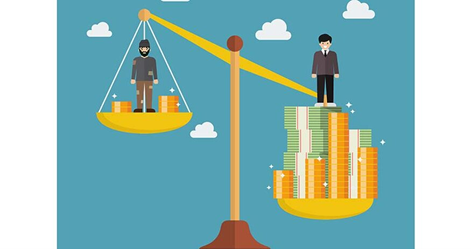
Corporate greed is increasingly shaping the trajectory of technological innovation, with profound consequences for social development. (Image Credit: Depositphotos.com)
If technological innovation is to serve society - rather than the other way around - governments must ensure working people have a real voice in determining what is produced, how it is produced and for whom. Of course, innovation can contribute to increased productivity, employment creation, better working conditions and improved public services. However, this is never automatic. Technological innovation is a means and not an end - a tool and not a solution to the structural problems of social and economic development. As it stands, the Doha Political Declaration falls short of providing the policy guidance needed to confront the growing power of capital in the digital economy and to ensure that innovation advances social development rather than simply corporate profit.
- Log in to post comments