
When citizens move, political will follows: Citizen Action and the future of the Doha Declaration
Marion Ouma
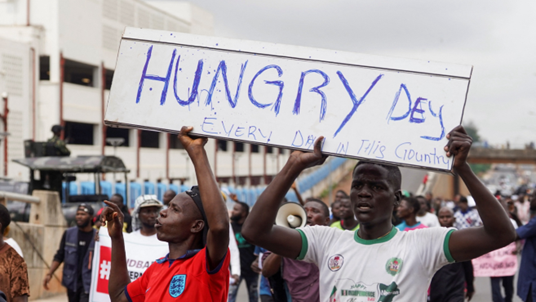
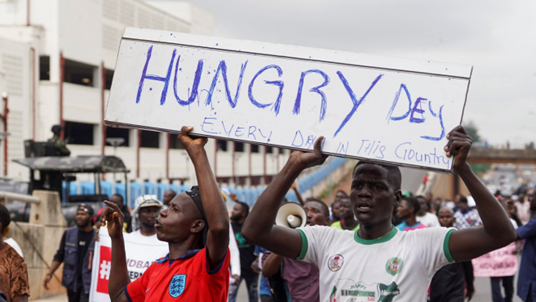
Political will does not emerge on its own. Pressure, incentives, and citizen action shape it. (Image credit: issafrica.org)
The Second World Summit of Social Development (WSSD) took place in Doha between 4th to 6th November 2025, leading to adoption of the Doha Political Declaration of the “World Social Summit.” In the sessions I attended, delegates stressed the need for ‘political will’ in actualizing the agreed-upon declaration. The phrase also appears in the last paragraph of the declaration thus: “We commit with united efforts, political will and firm actions to advance concrete, integrated and targeted policies and actions to implement the Doha Political Declaration and achieve social development for all in line with the Copenhagen Declaration and Programme of Action.” A lot needs to be done to unpack this commitment but for now I will dwell on the phrase ‘political will’, to explain why the concept is important for progress on social development and what part citizens can play.
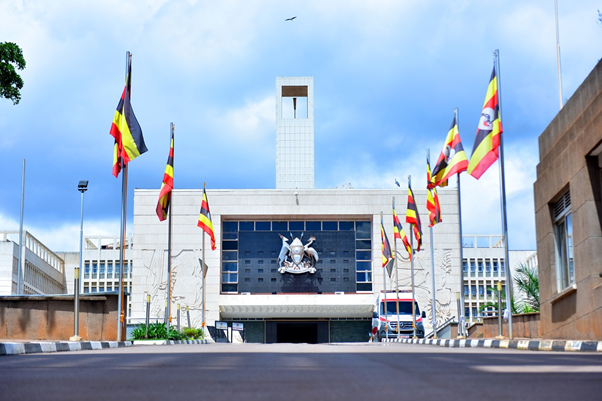
Declarations signal intent, but without sustained pressure, commitments rarely translate into action. (Image credit: parliament.go.ug)
Political will is a complex and often debated concept. It can loosely be described as sustained intent and commitment from political actors to certain tangible actions and policies. The phrase ‘political will’ often comes up in such commitments and declarations as the formula for policy reforms and implementation. The lack of political will is blamed for failure of policy reforms or the lack of government uptake of certain policies in education, health or social protection. If we claim that progress and reforms will happen if policymakers have the will, then we suggest that policy reform will happen only if politicians want it to happen.
Considering the slow and uneven progress made following the Copenhagen Declaration 30 years ago, the Doha Political Declaration needs more than political commitment if the values of a just, inclusive, equitable and sustainable world are to be achieved. Between the two summits, we have witnessed significant progress globally on social development. Poverty levels have dropped, people are living longer, child mortality is at its lowest and access to education has improved. Beyond average figures of progress which can mask regional and national realities, complex and interrelated challenges such as the effects of climate change, and economic problems like poverty, debt burdens and inequality persist in most countries in Africa. Moreover, conflict and pandemics threaten to reverse progress made over the years. Rapid progress on the core themes of social development, poverty eradication, promotion of full and productive employment and decent work for all, and social integration need unwavering political backing – or as stated in the Doha Declaration, ‘political will’ for realisation of the commitments.

Debt distress, inequality, and economic shocks continue to constrain progress on social development across Africa. (Image credit: borgenproject.org)
How then do we get political actors and policy makers to actualize the commitments in the Doha Declaration?
To answer the question, it is necessary to focus on the “political” in the phrase “political will.” Politics is about actions that are taken for ideological reasons, actions taken for electoral reasons, actions taken to distribute or redistribute resources across social groups. Therefore, these actions are undertaken by politicians to serve the public interest. But that politicians will always act in the interest of the public is not guaranteed. Politicians can be constrained by other competing interests, including how much policy autonomy exists at certain periods. For instance, in times of debt distress, as is presently the case in several countries in Africa, policy space is constrained by the dictates of global policy institutions and transnational corporations.
Political elites respond to pressures, especially those that threaten their positions. Attempts at incentivizing the political elite through electoral processes – those that get them elected or ousted out of political office or those that keep them in power - can be wielded to create political will. However, these electoral incentives can be limited in situations where there are no credible alternatives, and where it is possible to engineer victory through violence, patronage and rigging.
Therefore, what are some of the ways through which we can incentivize political will? The answer lies in creating the right incentives through citizen action. To demonstrate this, I take a recent example of Kenya with reference to the Gen Z protests. At the heart of the protests were social questions related to unemployment, poverty, rising cost of living, inequality and a lack of redistributive policies. The Finance Bill 2024, through which the government aimed to raise more revenue through taxes, became the trigger that forced young people into street protests. Despite continued pressure from the public, members of parliament passed the controversial Bill on 25th June 2024, leading protesters to storm Parliament Buildings, setting them on fire, braving loss of life through state violence. Only then did the President withdraw the Bill, with the same members of Parliament who had passed the Bill congratulating him for not signing the same Bill they had passed. So, did the President and the politicians suddenly discover “political will”? No, they did not. Their action, to withdraw the Bill, was driven by threats arising from citizen action.
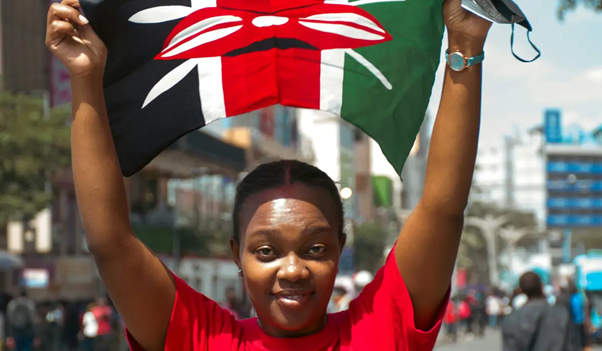
The withdrawal of Kenya’s Finance Bill showed that political action followed citizen pressure, not a sudden bout of goodwill. (Image credit: accord.org.za)
While the withdrawal of the Finance Bill provides a lesson on how mass protest can bring about change, the hold of the neoliberal elite in Kenya remains firmly in place, suggesting that we need a multiplicity of responses to the crisis of political will. To get government action on commitments on labour and employment, poverty, health, education and social protection as espoused in the Doha Declaration, we need citizens’ involvement through social action – maybe not necessarily in the form of street protests – but action steeped in collective efforts of citizens. As citizens, we need to create the appropriate incentives to drive political action towards investment in social development.
Incentivizing political will is not simple, as there are several conditions that have to be in place to make this possible and effective. While institutions - like constitutions - provide a foundation that aligns politicians’ incentives to the people’s will for social development, such institutions may be insufficient. In times of extended precarity and vulnerability, shifting funding priorities and waning global solidarity, the onus is on citizens to re-activate the new social contract. We need to invigorate within the political elites a sense of urgency through advocacy, community organizing and public participation for progress on social development. This sort of social action needs to be grounded in the values of justice and inclusivity as espoused in the Declaration.
- Log in to post comments